Experiment 9: Hemoglobin Estimation by Sahli’s Method
Aim
To estimate the hemoglobin content using Sahli’s Hellige method.Requirements
- Lancet
- Denatured spirit or ethanol (70%)
- Cotton swab
- Sahli-Hellige Hemoglobinometer
- Distilled water
- 0.1 N Hydrochloric acid (HCl)
Reference
Practical Handbook of Human Anatomy and Physiology by S.R. Kale, Nirali Prakashan, 8th Edition (2002), pages 5 to 9Introduction
Hemoglobin (Hb) is an iron-containing protein in red blood cells that transports oxygen from the lungs to tissues and returns carbon dioxide back to the lungs. Estimating hemoglobin levels is important for diagnosing conditions like anemia and monitoring overall health.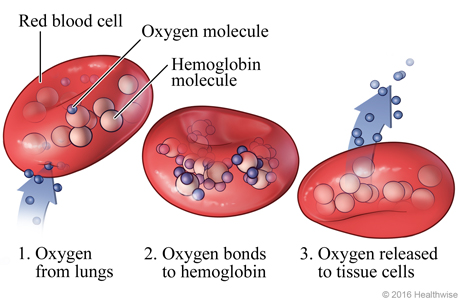
Principle
This method is based on the acid hematin reaction. Hemoglobin reacts with hydrochloric acid to form brown-colored acid hematin. The solution is then diluted with distilled water until its color matches the standard comparator. The hemoglobin concentration is read directly from the calibrated tube.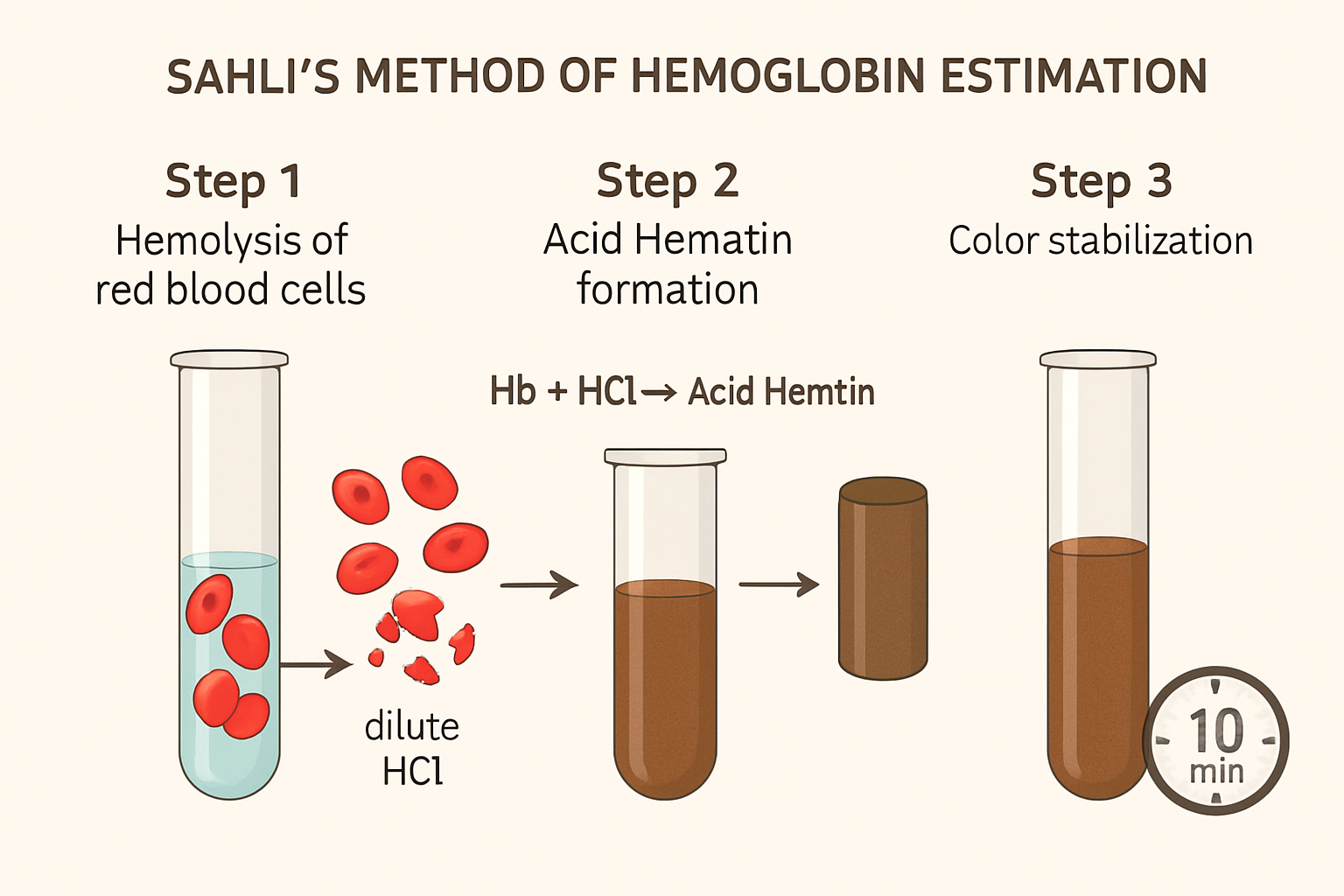
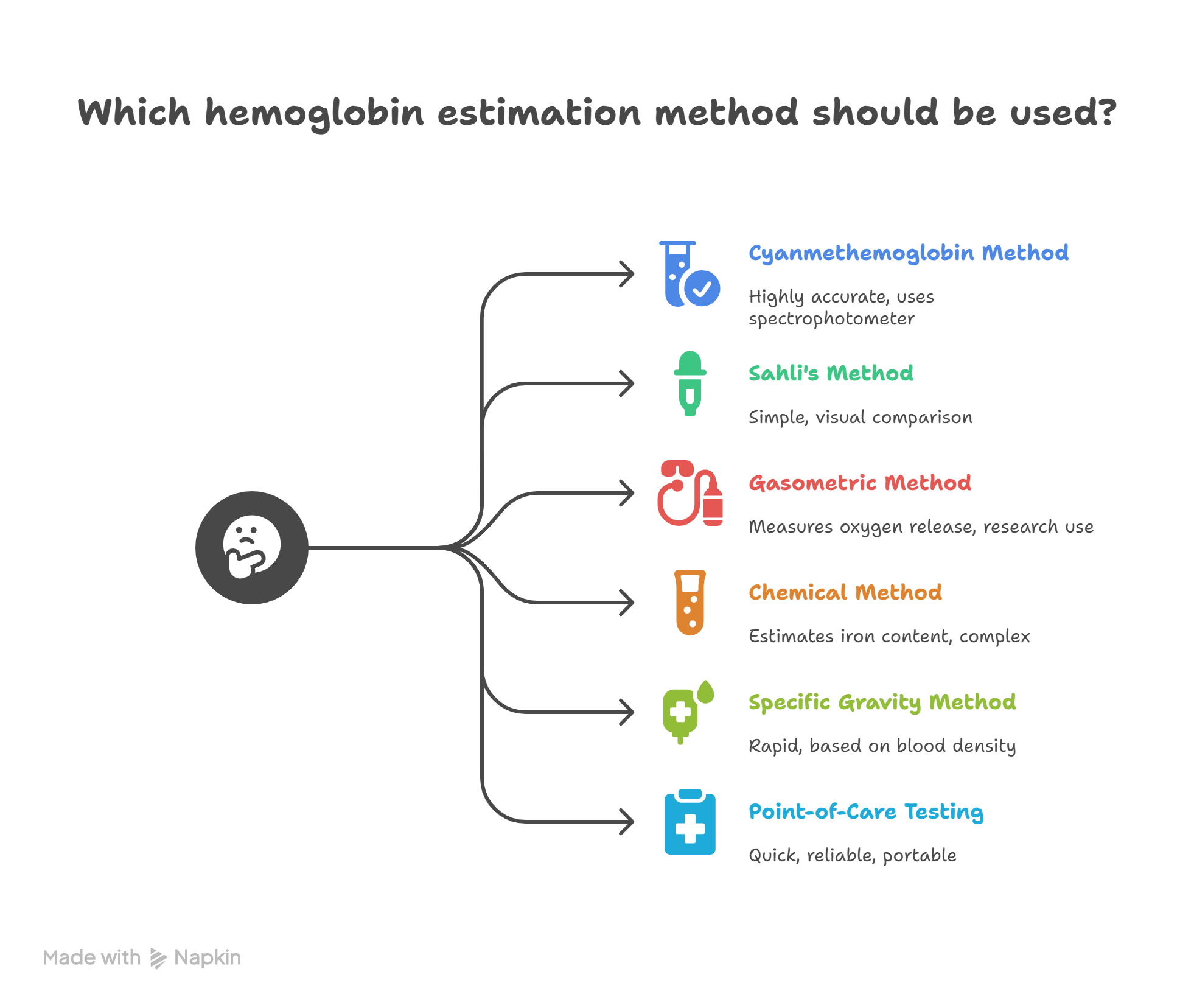
Hb Estimation Methods
- Colorimetric Methods
- Cyanmethemoglobin Method: Converts hemoglobin to cyanmethemoglobin and measures absorbance using a spectrophotometer. Highly accurate.
- Sahli's Method: Visual comparison with a color standard. Simple but less precise.
- Other Methods
- Gasometric Method: Measures oxygen released from hemoglobin. Used mainly for research.
- Chemical Method: Estimates iron content in hemoglobin. Complex and less common.
- Specific Gravity Method: Based on blood density. Rapid but less accurate.
- Point-of-Care Testing: Portable devices like Hemocue provide quick and reliable results.
Procedure
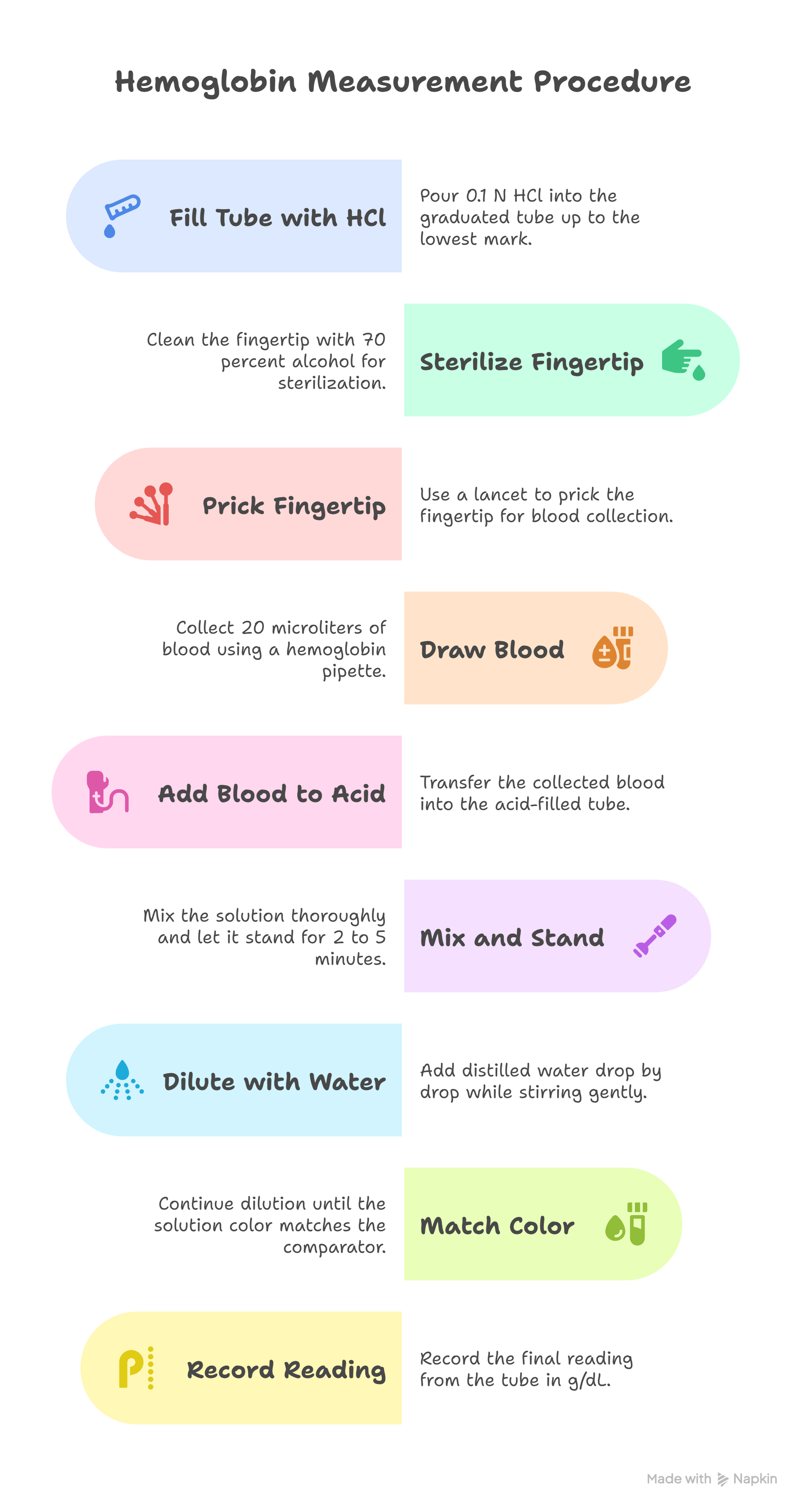
- Fill the graduated tube with 0.1 N HCl up to the lowest mark.
- Sterilize the fingertip with 70 percent alcohol and perform a bold prick using a lancet.
- Draw 20 microliters of blood using the hemoglobin pipette.
- Add the blood to the acid in the graduated tube.
- Mix thoroughly with the stirrer and let it stand for 2 to 5 minutes.
- Add distilled water drop by drop, stirring gently.
- Continue dilution until the solution color matches the brown glass comparator.
- Record the final reading from the graduated tube in grams per deciliter (g/dL).
Normal Hemoglobin Levels
- Men: 13.5 to 17.5 g/dL
- Women: 12.0 to 15.5 g/dL