Experiment 15: Determination of Erythrocyte Sedimentation Rate (ESR)
Aim
To determine Erythrocyte Sedimentation Rate (ESR).Requirements
- Denatured spirit solution or ethanol solution
- Cotton swab
- Lancet
- Syringe
- Westergren’s ESR pipette
Reference
Practical handbook of Human Anatomy and Physiology by S.R. Kale. Nirali Prakashan, Eighth Edition, 2002, Page number: 28-29.Introduction
ESR can be measured in the laboratory by two methods: Westergren method, Wintrobe’s Method, Cutler’s Method. The International Council for Standardization in Hematology recommends the use of Westergren method as the standard method for measuring ESR.
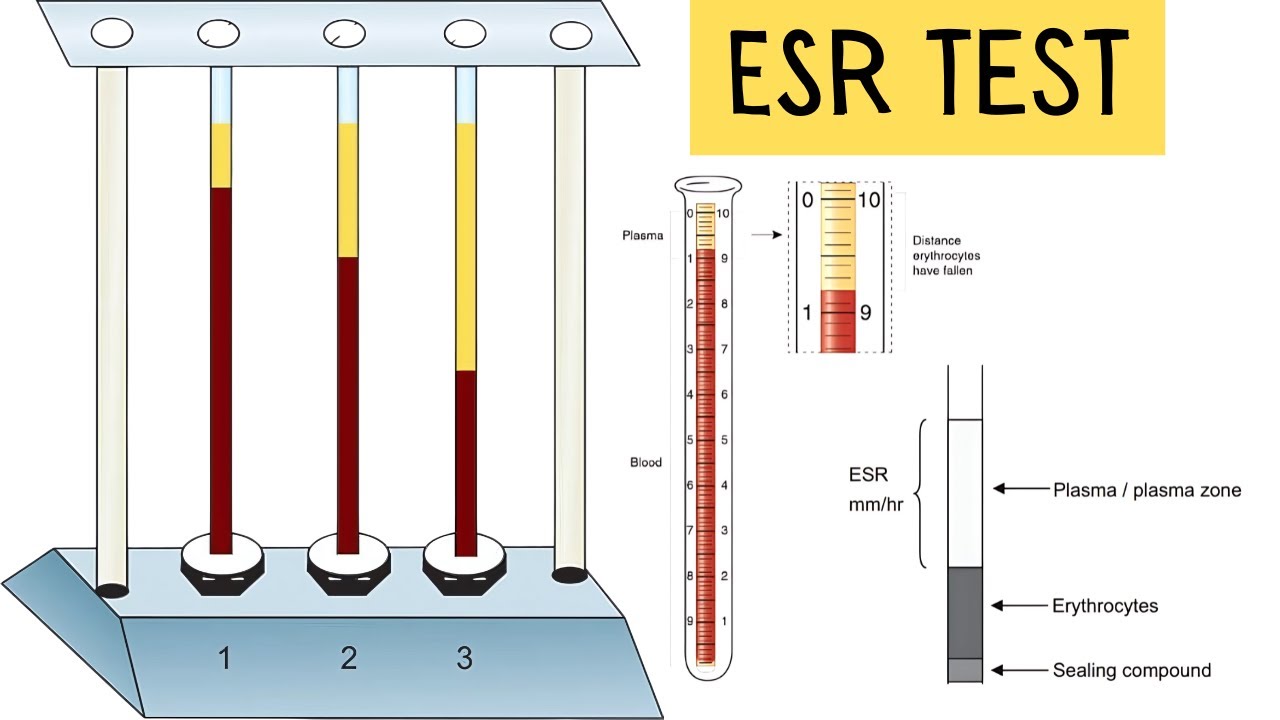
Westergren method: The Westergren pipette is a glass pipette 30 cm in length and 2.5 mm in diameter. The bore is uniform to within 5 percent throughout. A graduated scale in mm extends over the lower 20 cm. ESR is the rate at which erythrocytes sediment on their own weight when anticoagulated blood is held in a vertical column. It is expressed as the fall of RBCs in mm at the end of first hour. The ESR is measured in terms of millimetre per hour. The values of sedimentation rate vary from method to method because it is dependent upon the length and diameter of the tube.
Males: 0 to 5 mm at the end of 1st hour.
Females: 0 to 7 mm at the end of 1st hour.
Procedure
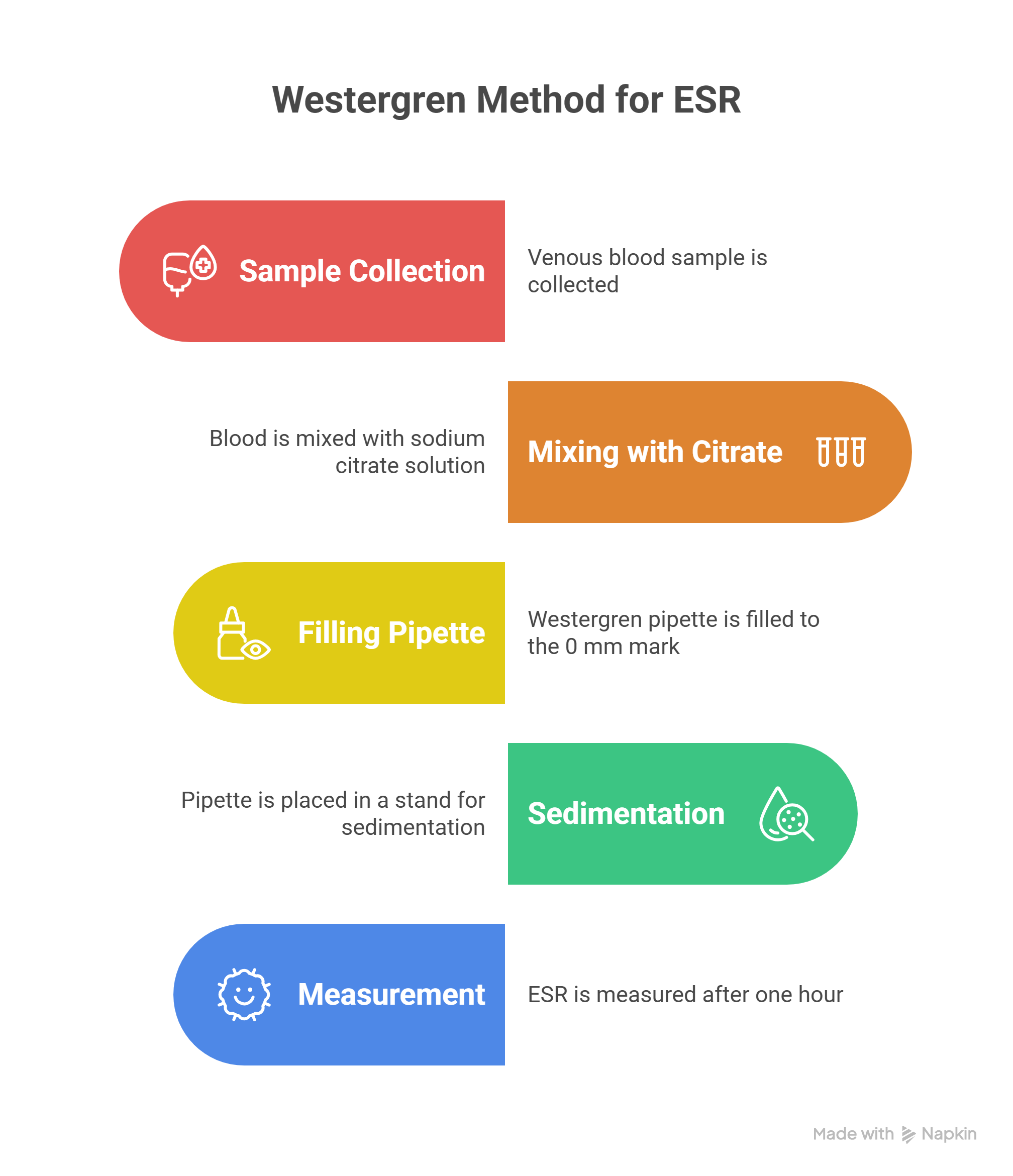
- Sample Preparation: A venous blood sample is collected and mixed with a 3.8% sodium citrate solution in a specific ratio. The correct ratio is 1 part sodium citrate to 4 parts blood.
- Filling the Pipette: The Westergren pipette is filled with the prepared blood mixture to the 0 mm mark.
- Sedimentation: The pipette is then placed in a Westergren stand, ensuring it is held perfectly upright and at room temperature.
- Measurement: After one hour, the distance in millimeters from the bottom of the plasma meniscus to the top of the red cell column is measured. This value is the ESR.
Precautions
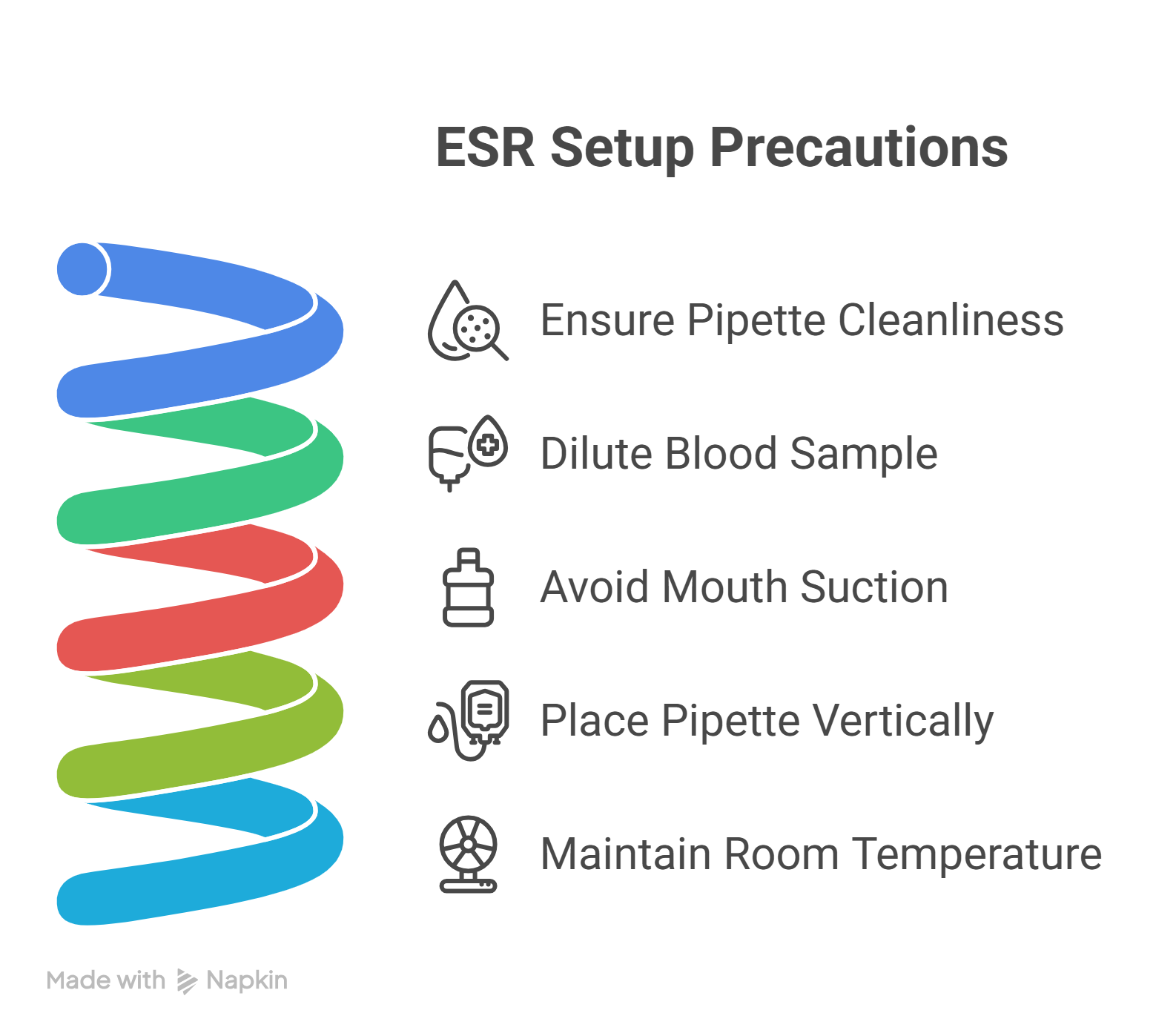
- Westergren pipette must be clean and dry.
- Dilute the blood sample just before setting up the ESR.
- Never use mouth suction to fill the pipette.
- The Westergren pipette must be placed vertically.
- The ESR must be set up at room temperature (18 to 25 degrees Celsius).