Experiment 13: Determination of Heart Rate and Pulse Rate
Aim
To determine heart rate and pulse rate.Requirements
- Stethoscope
- Stopwatch
Reference
Practical handbook of Human Anatomy and Physiology by S.R. Kale. Nirali Prakashan, Eighth Edition, 2002, Page number: 44.Introduction
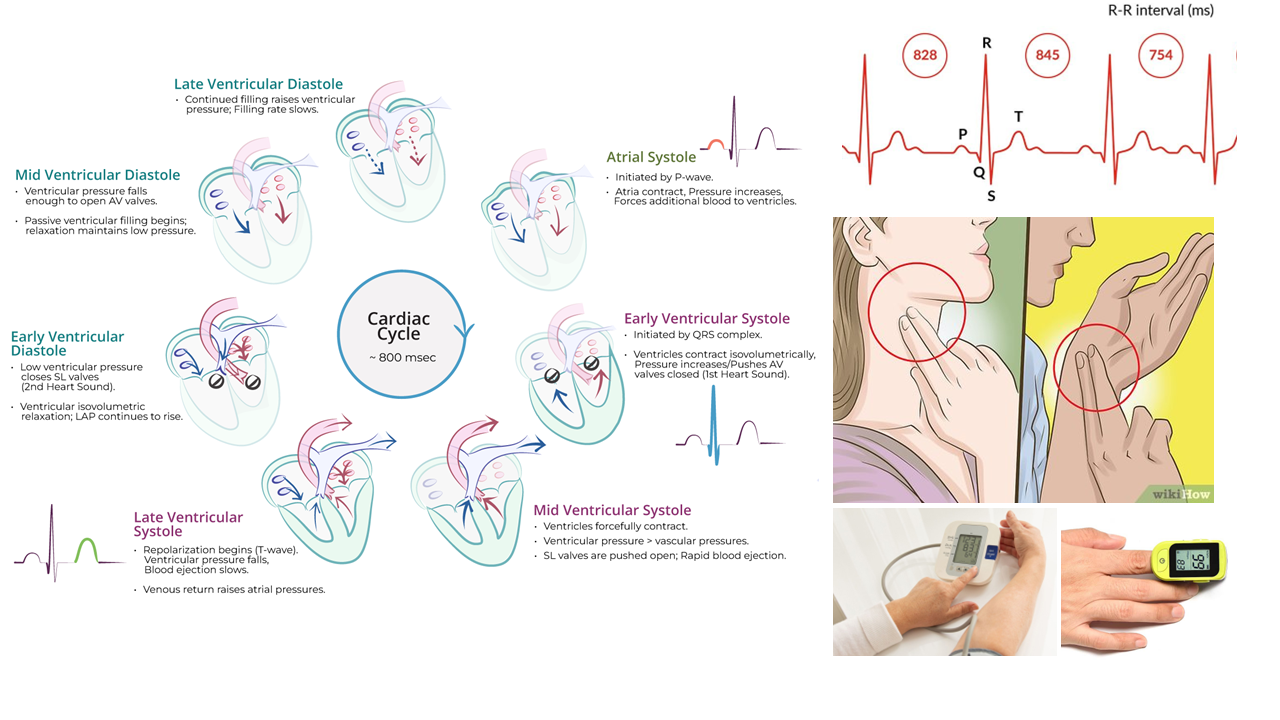
Heart rate may be defined as the number of heartbeats per unit time, usually per minute. During the ventricular systole, heart size is reduced. At this time the apex of the heart tenses and strikes against the thoracic valve. This is referred to as heartbeat.
Heart rate and pulse rate are different because heart rate measures the heartbeats of the heart and whereas a pulse rate measures the rate of blood pressure. The most accurate way to measure heart rate is through an electrocardiogram (ECG), which records the electrical activity of the heart. However, it can also be estimated using a stethoscope to listen to the heartbeat or with electronic heart rate monitors.
Pulse rate is typically measured by palpating (feeling) an artery close to the surface of the body. Common sites include the wrist (radial artery), neck (carotid artery), and groin (femoral artery).
Procedure
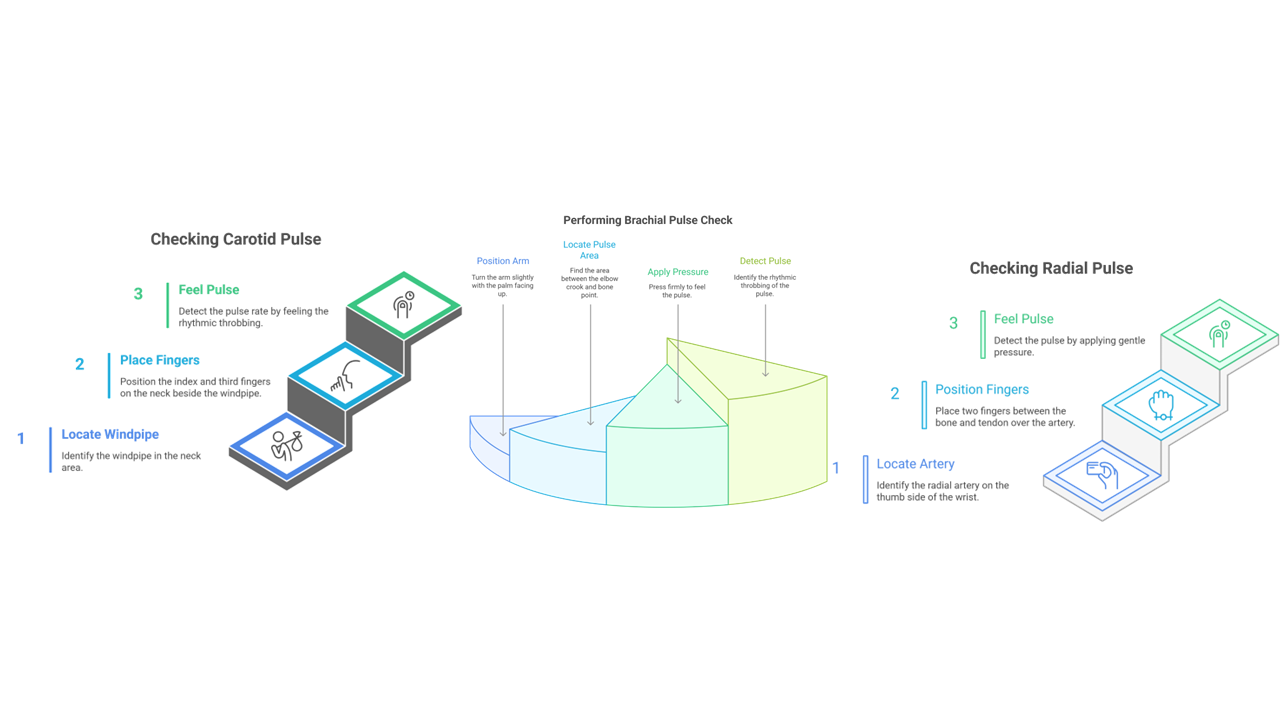
For Pulse Rate:- Radial Pulse Method:
- Check the pulse through the wrist.
- At wrist, place two fingers between the bone and tendon over your radial artery which is located on the thumb side of the wrist.
- Carotid Pulse Method:
- It checks pulse rate through windpipe.
- Place the index finger and third finger on the neck to the side of the windpipe.
- Pedal Pulse Method
- Brachial Pulse Method:
- This method is commonly used in young children.
- Turn the arm slightly and arm face should be towards the ceiling.
- Place the index finger and middle fingers along the side of arm between the crook of your elbow on the top and the point of your elbow bone on the bottom, press quite firmly to feel the pulses.
 For Heart Rate:
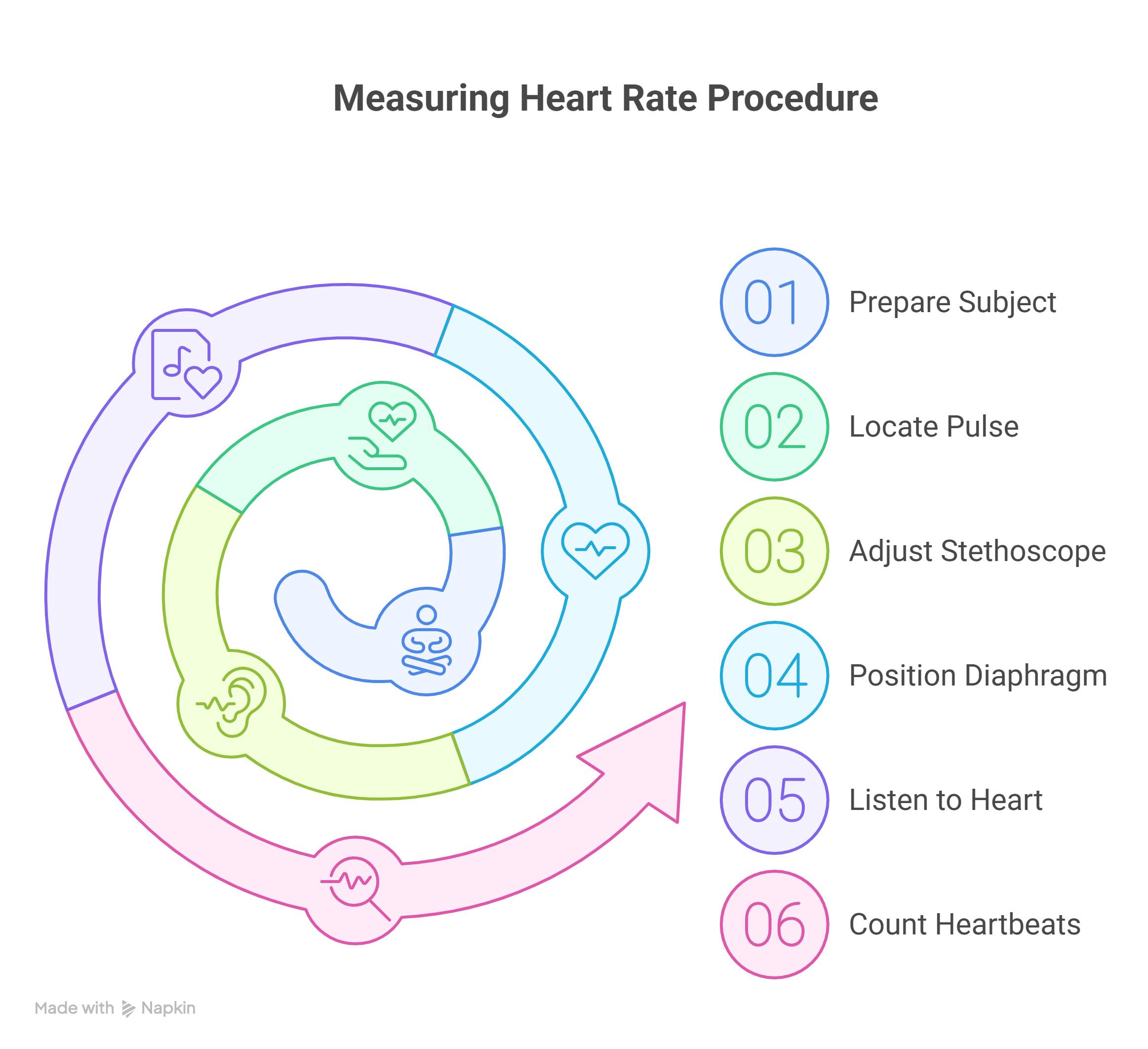
- Allow the subject to sit in calm condition or lie in supine position.
- Locate the pulse; gently place the tips of your index and middle fingers on the inside of their wrist below the base of the thumb.
- Adjust stethoscope’s earpieces.
- Hold the diaphragm over the subject’s heart. Position the diaphragm on the left upper part of the chest where 4th to 6th ribs meet, almost directly under the breast.
- Listen to heart for full minute. Hear the normal sound.
- Count the number of heartbeats you hear in a minute.
Report
The heart rate was found to be _______ per minute.The pulse rate was found to be _______ per minute.