Experiment 11: Enumeration of Total Red Blood Corpuscles (RBC) Count
Aim
To enumerate total red blood corpuscles (RBC) count.Requirements
- Denatured spirit solution or alcohol
- Lancet
- Cotton swab
- RBC fluid
- RBC pipette
- Neubauer’s chamber
Reference
Practical Handbook of Human Anatomy and Physiology by S.R. Kale. Nirali Prakashan, Eighth Edition, 2002, Page 09-16.Introduction
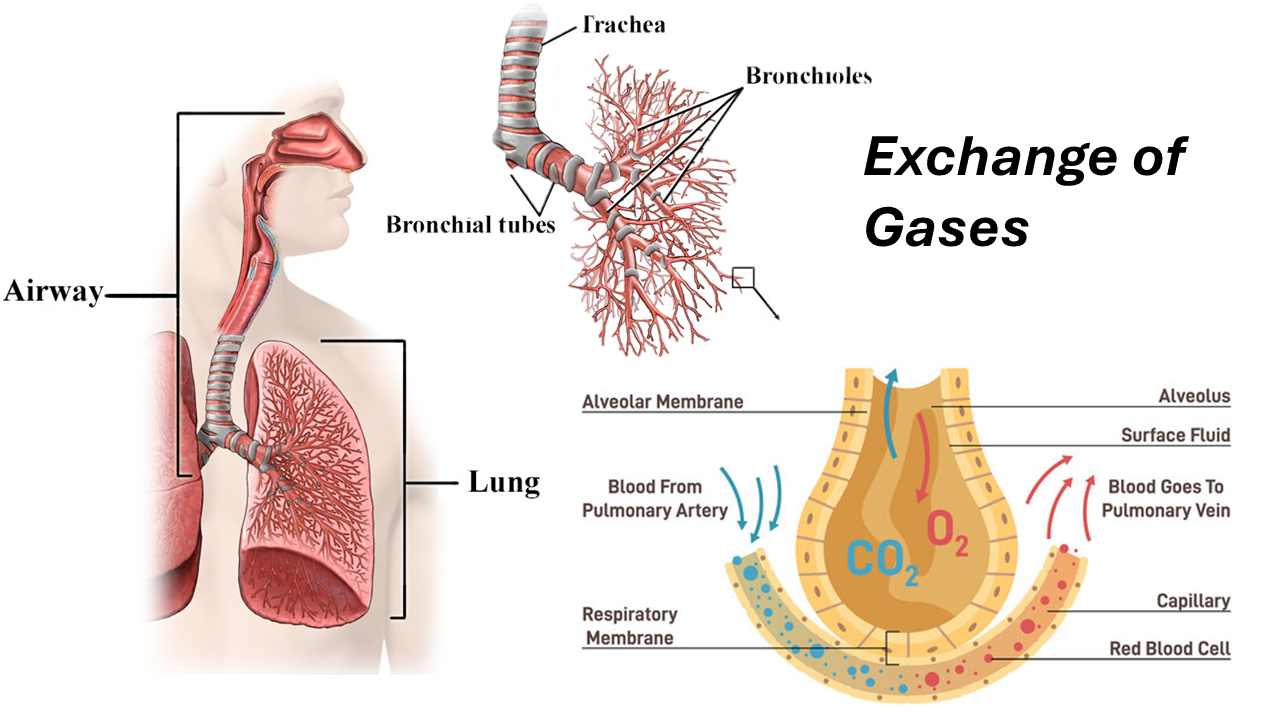
Red blood cells (RBCs) are small, round, and flexible discs in the blood that carry oxygen from the lungs to the body and bring carbon dioxide back to the lungs to be removed. Their biconcave shape makes it easy for them to move through tiny blood vessels called capillaries. RBCs are about 7.2–7.4 microns wide and, when mature, do not have a nucleus. They contain hemoglobin, an iron-rich protein that carries oxygen. Each RBC lives for about 100–120 days.
There are so many RBCs in blood that it’s impossible to count them directly with a microscope. Instead, a special counting tool called a hemocytometer or Neubauer’s chamber is used. Blood is first diluted using a special fluid (like Hayem’s or Formalin Citrate solution), which preserves the RBCs and helps in counting them accurately. Hayem’s fluid is preferred because it does not harm the cells, while normal saline can cause errors in counting. After dilution, the blood is placed in the chamber, and RBCs are counted in specific areas.
Procedure
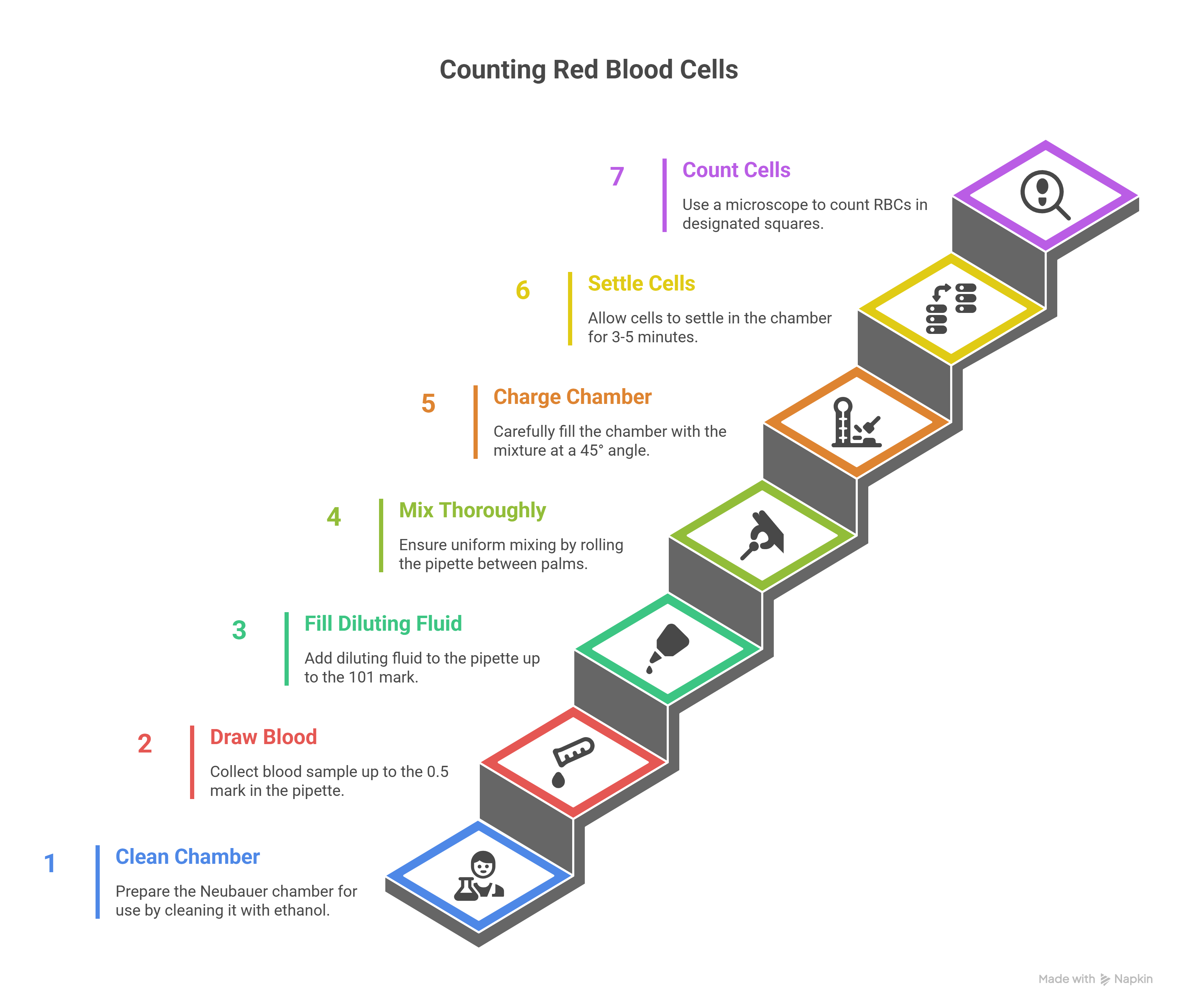
- Clean Neubauer’s chamber and cover glass using a swab dipped in 70% ethanol; allow to air dry.
- Draw blood up to 0.5 mark in RBC pipette and wipe it clean.
- Fill diluting fluid (preferably Hayem’s) up to 101 mark.
- Mix thoroughly by rolling pipette between palms.
- Discard 1–2 drops, then charge chamber with next drop at 45° angle.
- Ensure chamber is properly filled without air bubbles.
- Let cells settle for 3–5 minutes.
- Focus the chamber under microscope using 10x objective lens to locate counting area.
- Enumerate total RBC count using 40x objective lens.
Calculations for Total RBC Count
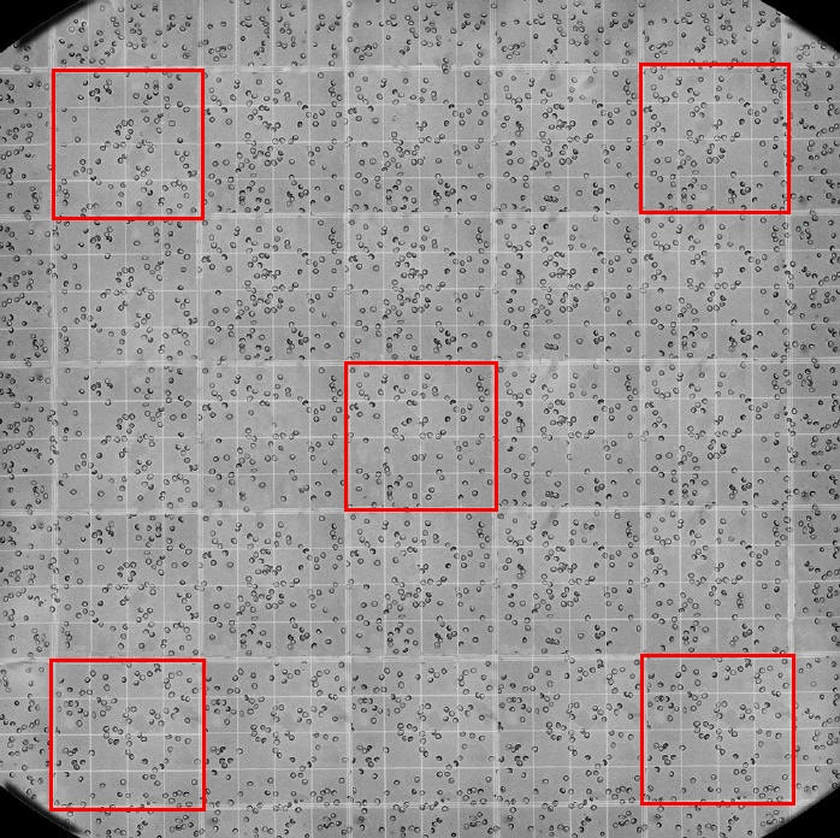
- After counting the cells under the microscope, we know the number of RBC in 5 squares of the central square. Let’s consider it as N (number of cells).
- The volume of the fluid inside the chamber is the product of Area and depth of the Hemocytometer / Neubauer’s chamber.
- The central area is 1 sq. mm which is divided into 25 parts so the area is 25 squares = 1 sq. mm
- Out of these 25 squares, the RBCs are counted in 5 squares. So the Area of 5 small squares is 5/25 i.e. 1/5
- The depth of the Hemocytometer is 0.1 mm.
Now Apply the Following formula to get the Total Red Blood Cell Count:
Total RBC Count = N × Dilution / (Area × Depth)
= N × 200 (or 100 as the dilution is made) / (1/5 × 0.1)
= N × 10000 / mm3
Reference Values
Normal RBC Counts
- Adult Males: Approximately 4.7 to 6.1 million cells/μL
- Adult Females: Approximately 4.2 to 5.4 million cells/μL
Factors Affecting RBC Count
- Age and Sex: Women typically have a lower RBC count than men.
- Altitude: Living at high altitudes can increase RBC counts.
- Health Conditions: Conditions like dehydration, kidney disease, and lung disease can affect RBC levels.